


Dr. Felicia Tamuno advocates non-interest banking, ethical finance to boost women-led businesses in Africa
 admin
admin
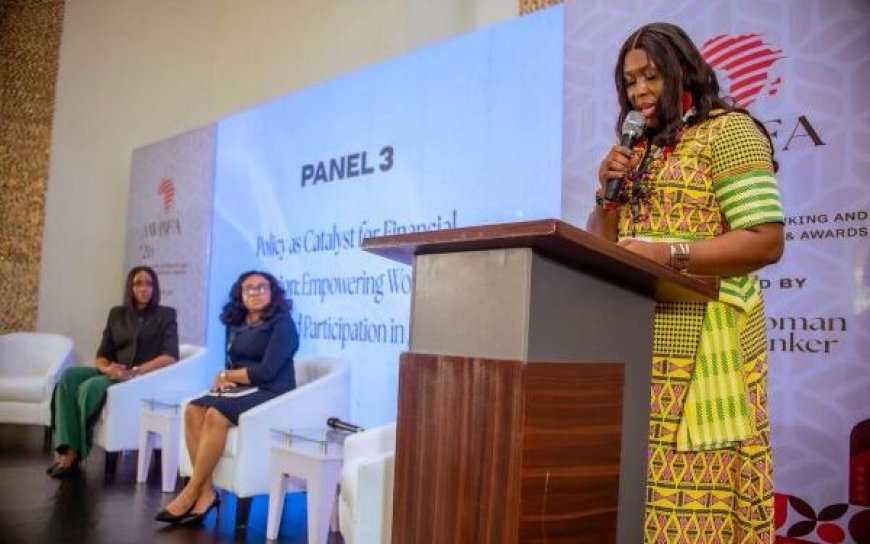
Dr. Felicia Tamuno, Institutional Banking Lead at The Alternative Bank, has called for stronger policy reforms, non-interest banking solutions, and ethical finance models to improve access to finance for women across Africa.
She made the call while delivering a keynote address at the African Women in Banking and Finance Conference & Awards 2026.
Speaking on the theme, “Policy as a Catalyst: How Laws and Regulations Can Empower Women in African Banking,” Tamuno said Africa’s financial systems must evolve to reflect the realities of women entrepreneurs and professionals.
According to her, many women-led businesses remain excluded from formal financing because traditional lending models still rely heavily on fixed asset collateral, formal property ownership, and long credit histories.
She noted that this creates structural barriers for women operating in informal and semi-formal sectors despite their growing contribution to African economies.
Citing data from the World Bank and the African Development Bank’s AFAWA initiative, Tamuno said women in Sub-Saharan Africa account for more than 80% of self-employed individuals, yet continue to face a $42 billion financing gap.
The banking executive said regulators and financial institutions must embrace alternative credit models, cash-flow-based lending, and movable asset financing to improve financial inclusion for women-owned businesses.
She also highlighted the role of non-interest banking products and ethical finance structures in supporting women entrepreneurs.
According to her, partnership-based and asset-backed financing models provide stronger opportunities for risk-sharing and can help women-led businesses access capital without the limitations of conventional lending structures.
Tamuno further stated that digital banking, fintech innovation, and alternative credit assessment systems could significantly expand financial access for underserved women across Africa.
Beyond access to finance, she raised concerns over the leadership gap within African financial institutions.
She noted that while women remain well represented at entry and middle-management levels, representation drops significantly at executive and board positions across the continent.
“Leadership diversity is not a concession. It is a competitive advantage,” she said.
Tamuno urged policymakers, regulators, and financial institutions to redesign financial systems in ways that support inclusion, innovation, and long-term economic growth.
She added that empowering women in finance should be viewed as an economic strategy capable of unlocking broader prosperity across African economies.