

U.S. Embassy in Abuja suspends visa appointments amid protest fears
 admin
admin
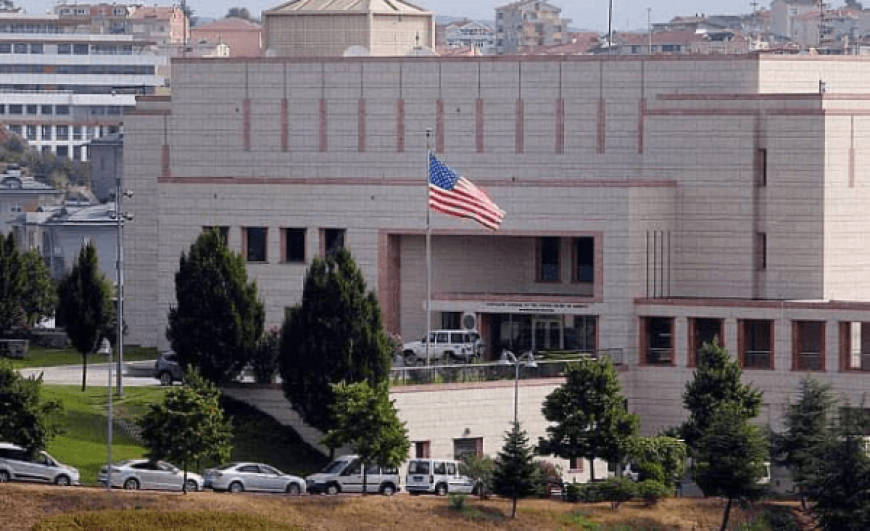
The U.S. Embassy in Abuja has cancelled all visa appointments scheduled for Wednesday, March 4, citing security concerns over possible protests in the city.
The announcement was made in a statement posted on the Embassy’s official X account on Wednesday.
Applicants affected by the cancellations are expected to receive instructions on how to reschedule, while the embassy urged the public to monitor its official channels for updates.
The embassy emphasized that the cancellation is temporary and applicants will be notified when services resume.
What they are saying
The U.S. Embassy highlighted that the decision was motivated by potential demonstrations and advised the public to stay informed through official sources.
- “Due to the potential for protests in Abuja, the U.S. Embassy in Abuja has cancelled all visa appointments on Wednesday, March 4, 2026. Applicants will be contacted with information on how to reschedule. Please monitor our website and social media channels for further updates,” the Embassy stated.
The statement expressed gratitude to the public for understanding and cooperation during the temporary suspension.
The embassy stressed that the pause is intended to prevent disruption while maintaining security and that visa services will continue once the situation is deemed safe.
Backstory
Recent protests have erupted in several Nigerian states following the escalation of the Middle East conflict. Members of the Islamic Movement of Nigeria (IMN) staged demonstrations against the joint U.S.–Israeli military operation in Iran that killed Iran’s Supreme Leader, Ayatollah Ali Khamenei.
- Protests were reported in Lagos, Kano, Sokoto, Gombe, Kaduna, and Yobe states, with demonstrators marching and holding placards denouncing foreign aggression. Security forces were deployed along protest routes, although no casualties have been confirmed.
The situation has escalated, with both Iran and the U.S.–Israeli forces intensifying military actions, including missile and drone strikes in the Gulf region.
What you should know
Beyond the temporary appointment cancellations, U.S. visa and immigration policies affecting Nigerian nationals have undergone several changes in recent months.
- Presidential Proclamation 10998, effective January 1, 2026, introduced a partial suspension of certain visa types for Nigerian citizens, including non-immigrant B‑1 and B‑2 visitor visas, as well as F, M, and J student and exchange visitor visas.
- Nigerian students and exchange visitors holding valid F1 and J1 visas are exempt from the suspension and may continue their studies and exchange programs in the U.S.
- Recent visa policy updates have imposed stricter conditions, including issuing most new visas as single-entry with three-month validity, instead of the multi-entry visas previously granted.
Digital screening measures now require applicants to disclose all social media usernames used in the past five years, and immigrant visa processing for Nigeria and 74 other countries was paused starting January 21, 2026.
The U.S. Mission has warned that overstaying a visa could affect future applications, highlighting the importance for Nigerians to comply with visa regulations and be aware of evolving immigration policies.
U.S. Embassy in Abuja suspends visa appointments amid protest fears - Nairametrics