

Salaries, debt service gulp 105% of govt revenue
 admin
admin
Debt service and personnel costs have swallowed more than the Federal Government’s total revenue for the first seven months of 2025, even as receipts fell sharply below target and capital projects suffered deep cuts.
An analysis of the 2026–2028 Medium-Term Expenditure Framework and Fiscal Strategy Paper, released on Wednesday on the website of the Budget Office of the Federation, showed that between January and July, the Federal Government earned N13.67tn as aggregate revenue, compared with a pro rata target of N23.85tn.
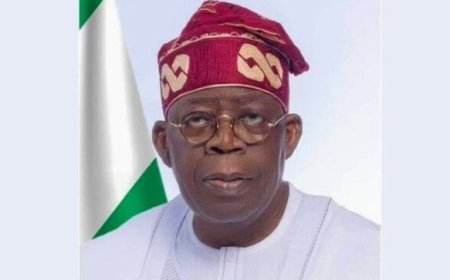
That left a revenue gap of N10.19tn, representing a shortfall of about 42.7 per cent. This shortfall occurred amid earlier claims by President Bola Tinubu in September when he said that Nigeria had met its revenue target for 2025 ahead of schedule and would no longer rely on borrowing to fund its budget.
Addressing stakeholders of The Buhari Organisation who visited him at the Presidential Villa in Abuja, Tinubu said his administration’s non-oil revenue drive had yielded enough to meet this year’s projections by August, reducing Nigeria’s dependence on external loans
“Today, I can stand here before you to brag: Nigeria is not borrowing. We have met our revenue target for the year, and we met it in August,” Tinubu told the delegation, which included former Nasarawa State Governor, Sen. Tanko Al-Makura, and other chieftains of the ruling All Progressives Congress.
However, the document does not validate this claim by the president, with the MTEF document showing that the revenue crisis was driven largely by a steep drop in oil receipts. Oil revenue for January to July stood at N4.64tn, compared with a pro rata target of N12.25tn, leaving a shortfall of N7.62tn or 62.2 per cent.
The share of dividends from entities such as the Nigeria Liquefied Natural Gas and development finance institutions also underperformed, yielding only N104.64bn against an expected N428.71bn. By contrast, some non-oil tax heads did better than expected. Company Income Tax collections for the Federal Government were N2.54tn, slightly above the prorated estimate of N2.49tn.
Value Added Tax also beat its projection, with FGN’s share rising to N630.10bn against a target of N567.54bn, an outperformance of about 11 per cent. However, these gains were not enough to compensate for weaknesses elsewhere.
Customs revenues fell to N988.29bn, about 39.1 per cent below the N1.62tn pro rata target, while Federation Account levies dropped by 70.1 per cent to N75.08bn.
The Nigeria Police Trust Fund levy and the share of oil price royalty also came in far below expectations, with the latter recording no inflow in the period.
The MTEF document read, “Overall, while VAT and EMTL provided some relief, their overperformance was insufficient to offset the deep shortfall in oil revenues and weaker-than-expected CIT collections.
“The midyear outcome highlights Nigeria’s continued fiscal vulnerability to oil sector underperformance, even as non-oil revenue sources gradually increase their contribution to the Federation Account.”
The document further showed that over the same period, the Federal Government spent N9.81tn on servicing domestic and external debts. When combined with personnel costs of N4.51tn for ministries, departments, and agencies and government-owned enterprises, debt service and salaries amounted to about N14.32tn, slightly above the total revenue recorded in the period.
This means that debt and wages alone were equivalent to roughly 105 per cent of the Federal Government’s income. The document showed that debt service alone already consumed about 71.8 per cent of aggregate Federal Government revenue in the first seven months of the year, underlining the pressure loan repayments are placing on the budget.
Capital budget suffers
On the expenditure side, the Federal Government appeared more successful in keeping recurrent obligations on schedule than in funding investment projects.
Total Federal Government expenditure (including government-owned enterprises and project-tied loans) was N20.40tn in the first seven months, against a pro rata target of N32.08tn, implying a 36.4 per cent shortfall. However, recurrent expenditure was much closer to plan: actual recurrent spending of N15.68tn was only 3.7 per cent below the N16.28tn pro rata target.
Within recurrent items, non-debt recurrent expenditure came to N5.87tn, down by 26 per cent compared with the prorated N7.93tn. Personnel costs for MDAs were N3.91tn, about 11.7 per cent lower than the N4.43tn expected for the period, while personnel for government-owned enterprises exactly matched the prorated N593.49bn. Pensions and gratuities, including service-wide pensions, were severely underfunded at N445.67bn, barely half of the N842.34bn pro rata figure.
The squeeze was even more visible on overheads and other service-wide votes. Overheads for MDAs amounted to N249.82bn, 64.8 per cent below the N709.53bn target, whereas overheads for GOEs were fully released. Other service-wide votes received only N56.73bn, compared with a prorated budget of N617.09bn, indicating a 90.8 per cent shortfall. The special intervention programme got no funding in the period, despite an expected N116.67bn.
By contrast, debt service overshot its budget. The Federal Government spent N9.81tn on debt obligations in the seven months, against a target of N8.35tn, an overshoot of 17.5 per cent. Domestic debt service stood at N4.65tn, 10.9 per cent above the N4.19tn pro rata figure, while foreign debt service jumped to N5.07tn, about 28.7 per cent higher than the N3.94tn projection.
The sinking fund, used to redeem maturing obligations, undershot its target, recording N96.70bn against N220.09bn.
The heavy debt burden is not new. The same MTEF document recalled that total debt service cost in 2024 was N13.12tn, equivalent to 46 per cent of Federal Government expenditure and 77.5 per cent of revenues, and warned that high servicing costs and limited fiscal space were constraining investment in critical sectors such as health, education, and infrastructure.
Capital projects rollover
Capital spending has borne the brunt of the fiscal squeeze so far in 2025. Aggregate capital expenditure for the first seven months was N3.60tn, compared with a prorated budget of N13.67tn, implying a shortfall of 73.7 per cent.
The sharpest cuts were recorded in capital projects executed by MDAs. Against a pro rata target of N10.81tn, MDAs and other capital votes received just N834.80bn, meaning that more than nine-tenths of the planned capital funds for the period were not released.
Grants and donor-funded projects fared relatively better, with N609.13bn spent against N421.11bn pro rata, while multilateral and bilateral project-tied loans recorded N1.68tn, slightly below the N1.96tn prorated estimate.
The Budget Office linked the weak capital outturn partly to the extension of the 2024 budget. It explained that many ongoing projects were still being financed under last year’s capital provisions after the National Assembly approved a rollover of the 2024 capital budget to December 2025.
As a result, part of the 2024 capital vote—about N2.23tn—was being financed in 2025, while new releases under the 2025 capital budget were managed cautiously in line with revenue performance.
“It is important to note that the execution of the capital component of the 2024 budget remains ongoing, following the National Assembly’s approval to extend its implementation period until December 2025,” the document stated, adding that expenditure releases in 2025 had been “cautiously managed in line with revenue outturns and the extended implementation of the FY 2024 budget.”
In recent years, delays in budget passage, late releases of funds, and frequent supplementary appropriations have resulted in overlapping fiscal cycles, with capital components of previous budgets extending well into subsequent years.
Earlier, The PUNCH reported that President Bola Tinubu asked the National Assembly to consider and pass the Appropriation, Repeal and Re-enactment Bill 2 of 2024, involving a total proposed expenditure of N43.56tn for the 2025 fiscal year.
The request was conveyed in separate letters to the Senate and the House of Representatives on Wednesday. According to the President, the proposed legislation is aimed at “ending the practice of running multiple budgets, while ensuring improved capital performance for both the 2024 and 2025 capital budgets.”
He stated, “This bill is to bring an end to the practice of running multiple budgets concurrently, while at the same time ensuring reasonable – indeed unprecedentedly high – capital performance rates on the 2024 and 2025 capital budgets.”
The PUNCH earlier reported that the Federal Government ordered ministries, departments, and agencies to carry over 70 per cent of their 2025 capital budget into the 2026 fiscal year as the administration moves to prioritise the completion of existing projects and contain spending pressures in the face of weak revenues.
This directive is contained in the 2026 Abridged Budget Call Circular issued by the Federal Ministry of Budget and Economic Planning and circulated to all ministers, service chiefs, heads of agencies, and top government officials in Abuja.
The circular stated that ministries and agencies must continue with the allocations already approved in the 2025 budget rather than seeking fresh projects.
It explained that the rollover is based on what it described as the immediate needs of the country and the development priorities of the administration. It listed the priorities that align with the policy direction of the government, such as national security, the economy, education, health, agriculture, infrastructure, power and energy, as well as social safety nets, including women and youth empowerment.
According to the circular, “MDAs are to upload 70 per cent of their 2025 FGN Budget to continue in FY2026. All such rollover and uploads MUST be in line with the immediate needs of the country as well as the government’s development priorities that align with the policy direction of the new administration, which hinges on National Security, the Economy, Education, Health, Agriculture, Infrastructure, Power & Energy, as well as social safety nets, women & youth empowerment.”
It also explained that only 30 per cent of the 2025 capital budget would be released within the current fiscal year, while the remaining 70 per cent would serve as the foundation for the 2026 capital budget, replacing the previous method of a traditional rollover.
Economist and professor at the Olabisi Onabanjo University, Sheriffdeen Tella, earlier faulted the basis of preparing the 2026 budget when implementation of the 2025 budget had barely begun.
He said he found the 2026 deficit troubling because “the budget of 2026 is supposed to be premised on the implementation or performance of 2025,” yet “they have just started implementing the 2025 budget… in December 2025.”
Tella added that “there is no basis for any budget because what they had, they have not implemented, and supported that the government should have rolled over the 2025 plan into 2026 instead of preparing a fresh document.
The National President of the Nigerian Economic Society, Professor Adeola Adenikinju, also criticised the government for drifting away from the January to December budget cycle. He said the timing of the MTEF/FSP approval showed that Nigeria was again running behind schedule, which undermines predictability and complicates economic planning.
Adenikinju said, “The 2026 budget should have been in the National Assembly for consultation so that we can keep to this January 1st thing. That makes our fiscal system predictable.” He argued that the late budget presentation prevents the National Assembly from carrying out proper scrutiny.
However, the Director of the Centre for the Promotion of Private Enterprise, Dr Muda Yusuf, supported the decision of the Federal Government to roll over 70 per cent of the 2025 budget to next year.
He said it was a necessary step to restore credibility to the budget process. He described it as a way to “normalise things because there will be no end to continuous rolling wells of budgets” if the situation were allowed to continue indefinitely.
Yusuf explained that it was unrealistic to keep approving fresh capital allocations when previous ones were still unimplemented.