
Nigeria Targets $13.97bn EV Charging Station Market By 2035
 admin
admin
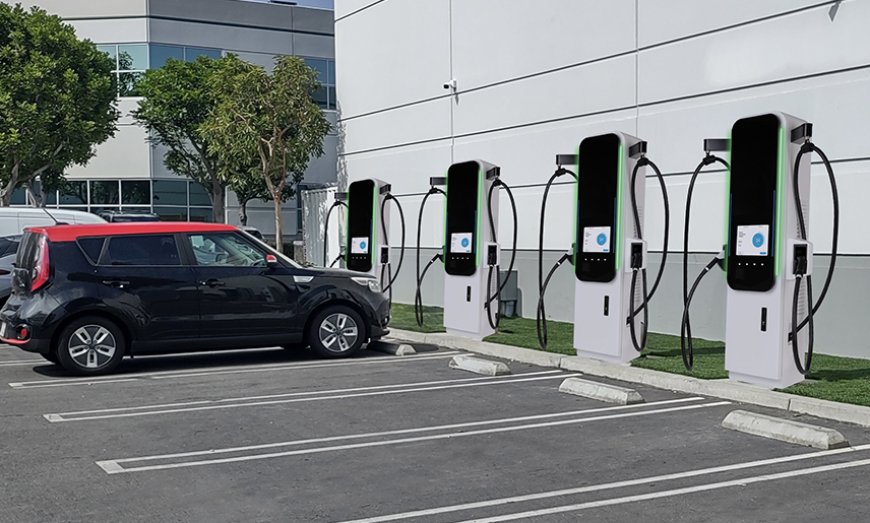
The Nigeria electric vehicle (EV) charging station market has been predicted to grow at a Compound Annual Growth Rate (CAGR) of 27.40 per cent during the forecast period of 2026-2035 to reach a value of USD 13.97 billion by 2035.
The market was valued at USD 1.24 billion in 2025, a report shows.
The gradual removal of fuel subsidies in Nigeria and the increase in diesel prices are pushing logistics and ride-hailing fleets to consider electrification, thereby speeding up the demand for reliable charging hubs that are integrated with solar backup and smart load management systems according to report by expert market research.
By power output, fast chargers are expected to grow at a CAGR of 30.2 per cent over the forecast period and by application, the three-phase category is expected to grow at a CAGR of 29.3 per cent over the forecast period.
The energy transition plan of the Federal Government, which is targeted at achieving net-zero emissions by 2060, highlights the electrification of transport as a key lever.
State-level transport authorities in Lagos are testing electric buses, supporting the surging, supporting the surging demand in the Nigeria electric vehicle charging station market, and justifying investments in semi-public charging stations. These measures not only lower the risk of early-stage infrastructure investments but also give fleet operators more assurance when it comes to charging cycles as well as operating costs.
According to the Nigeria electric vehicle charging station market analysis, in 2023, the country spent USD 25 billion on petroleum imports, a structural vulnerability that has intensified interest in electrified transport and localized energy solutions.
In response, companies are introducing bundled solutions, where Original Equipment Manufacturers (OEM-linked ) charging networks are expected to drive early commercial adoption.
In February 2026, Nigeria’s first locally assembled electric SUV, the Hyundai Kona, was inaugurated by the Lagos State Governor Babajide Sanwo-Olu, at Stallion Group’s VON plant, marking a green automotive milestone.
The Nigeria electric vehicle charging station market is developing in clusters. The majority of electric vehicle charging station installations continue to center around Lagos and Abuja.
In July 2025, Qoray and Sheraton Lagos Hotel launched a new fast EV charging station in Ikeja, boosting Nigeria’s electric vehicle infrastructure and accessibility. However, there has been a shift in conversation from single chargers to energy-integrated sites that combine solar-battery storage, and smart metering.
Despite the fact that power availability varies from one distribution company to another, operators are being compelled to come up with hybridized station designs rather than units that are dependent on the grid. This design preference is influencing procurement strategies, technology partnerships, as well as capital allocation models across the value chain.
Also, in January 2026 – LUG West Africa Announced Plans For 250 EV Charging Stations.
LUG West Africa is plans to install 250 EV charging points across Lagos, scaling Nigeria’s public charging infrastructure for e-mobility. Technology providers can supply smart charging software, payment integration systems, grid-balancing solutions, and renewable energy storage to support scalable nationwide charging networks.