
Lekki Deep Sea Port records highest cargo throughput in Nigeria for 2025
 admin
admin
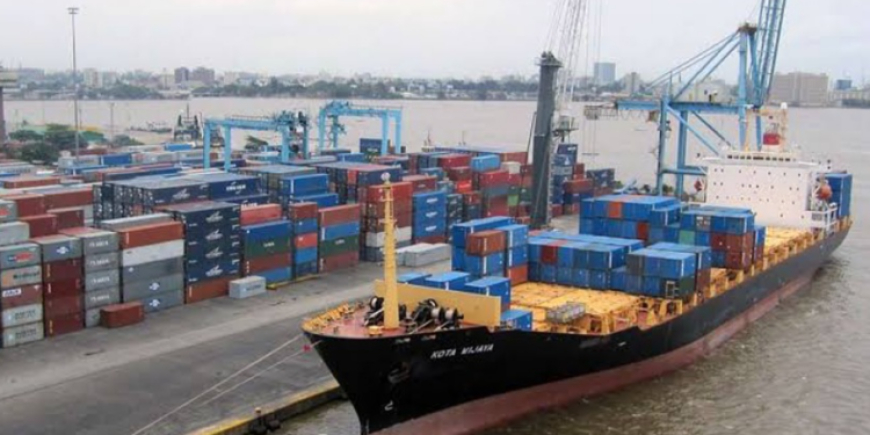
Lekki Deep Sea Port has emerged as Nigeria’s top port in terms of cargo handled in 2025.
The disclosure was made by the Managing Director of the Nigerian Ports Authority (NPA), Abubakar Dantsoho, on Wednesday while presenting highlights of the NPA’s 2025 Operational Performance Report, as reported by the News Agency of Nigeria (NAN).
The report shows that Lekki’s performance reflects its growing importance as a hub for both imports and exports, surpassing older ports such as Onne Port and Apapa Port.
What they are saying
According to the report, total cargo throughput across Nigerian ports rose 24.8% to 129.3 million metric tonnes in 2025, while container traffic increased to over 2.1 million twenty-foot equivalent units (TEUs). Lekki Deep Sea Port handled the largest share of cargo among all Nigerian ports, accounting for 40.6% of total national throughput.
- “On port performance, Lekki Port emerged as the leading port, handling 40.6% of the nation’s total cargo throughput,” the NAN report read in part.
Onne Port followed with 19.1% of total cargo, while Apapa Port handled 16.7%, maintaining their positions as key gateways for Nigeria’s imports and exports.
- While Lekki led in cargo volumes, Tin Can Island Port recorded the highest number of ship arrivals, accounting for 22.7% of all vessel calls in 2025.
Total ship calls across all ports rose nearly 12% to 4,477 vessels, reflecting growth in maritime traffic nationwide.
Vessels calling at Lekki and Onne were generally larger, with average Gross Registered Tonnage (GRT) of 55,712 and 53,022 respectively, compared with Apapa at 33,251 GRT, Tin Can Island at 36,909 GRT, and Delta Ports at 17,414 GRT.
Cargo composition and container traffic
Imports accounted for 59.2% of total cargo, primarily industrial goods, raw materials, and consumer products, while exports contributed 39%, including agricultural produce and non-oil commodities.
- Trans-shipment made up 1.8% of total cargo handled.
- Containerised cargo represented 24% of total throughput, reflecting trade in standardised shipping units, while liquid bulk cargo—including fuel and chemicals—dominated at 54.7%.
Container traffic grew 25.7% to over 2.1 million TEUs, with import containers rising 32.8%, export containers up 3.1%, and trans-shipment containers surging 205.8%, underscoring Nigeria’s expanding role as a regional logistics hub.
What you should know
As of the first three quarters of 2025, Nigeria’s “Trade by Top 10 Ports of Operation” tables showed rising activity across the country’s major ports, even before the full-year operational report was released.
- Apapa Port, at the time, remained Nigeria’s dominant trade gateway, while other ports were steadily growing in significance within the nation’s maritime trade.
- Apapa Port recorded about N74.78 trillion in combined imports and exports during Q1–Q3 2025.
- Lekki Deep Sea Port handled an estimated N13.46 trillion in total trade, placing it second by trade value during the period.
Tin Can Island Port recorded about N9.31 trillion in total trade, while Onne Port handled around N6.76 trillion over the same period.
Import activity remained a major driver of trade flows, with Lekki recording N7.39 trillion in imports, compared with N5.83 trillion at Tin Can Island and N3.81 trillion at Onne.
Exports also showed strong growth across several ports, with Apapa maintaining dominance at N52.57 trillion.
Lekki Deep Sea Port records highest cargo throughput in Nigeria for 2025 - Nairametrics