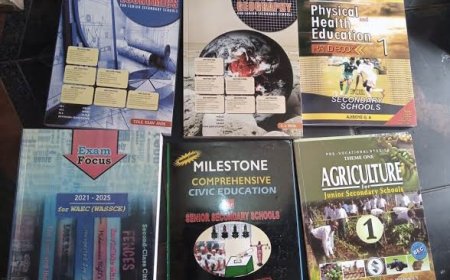


FG unveils policy to reduce education costs with reusable textbooks, uniform calendar
 admin
admin

The Federal Government has unveiled a new policy framework aimed at reducing education costs for parents while improving learning outcomes and sustainability in schools nationwide.
The policy was jointly issued by the Minister of Education, Dr. Tunji Alausa, and the Minister of State for Education, Prof. Suwaiba Ahmed, and made available to journalists in Abuja on Friday.
The announcement comes amid growing concerns over rising education expenses for families, frequent textbook changes, and declining learning outcomes across primary and secondary schools.
What the ministry is saying
The ministers said the policy forms part of ongoing reforms to reposition Nigeria’s education sector and ease the financial burden on parents.
They explained that the framework prioritises the use of standardised, high-quality textbooks designed to last between four and six years. Under the new framework, schools are prohibited from bundling disposable workbooks with textbooks.
The ministers explained that this approach would allow textbooks to be reused across multiple academic sessions, enable siblings to share learning materials, and significantly reduce recurring education costs for parents. It is also expected to cut down waste and support environmental sustainability.
The policy addresses longstanding concerns over frequent textbook revisions that offer little or no improvement in content or learning outcomes. The ministers noted that many parents are compelled to buy new textbooks annually due to minor layout changes rather than meaningful updates.
- Under the new framework, textbook revisions must follow structured and meaningful cycles, with changes reflecting substantive improvements in content rather than cosmetic adjustments.
- As part of quality control measures, the policy introduces limits on the number of approved textbooks per subject and grade level. This approach aligns with international best practices observed in countries such as Japan, Kenya, and Tanzania. The aim is to reduce confusion in schools, improve teaching consistency, and ensure that approved textbooks meet clear quality and curriculum standards.
More insights
The ministry noted that the Nigerian Educational Research and Development Council will continue to play a central role in the assessment and quality assurance of instructional materials.
Working with relevant education agencies, the council will ensure that only textbooks aligned with the national curriculum are approved for use in schools nationwide.
Beyond textbooks, the policy introduces a uniform academic calendar to promote consistency in teaching, learning, and school planning across the country.
Graduation ceremonies have also been streamlined to reduce financial pressure on parents. Under the new rules, only pupils and students completing Primary Six, Junior Secondary School 3, and Senior Secondary School 3 will be permitted to hold graduation ceremonies.
What you should know
The Federal Government has taken several steps to reform Nigeria’s education sector. Nairametrics reported that the government completed a comprehensive review of the national curriculum for primary, secondary, and technical schools to reduce content overload, improve learning outcomes, and align education with modern skills demands
They approved new admission guidelines that adjust entry requirements for universities, polytechnics, and colleges of education to expand access and create space for an additional 250,000 to 300,000 students yearly, while maintaining educational standards.
- Earlier reforms include the rollout of a digital portal for teachers’ registration and certification, intended to streamline professional development, licensing, and data on teacher performance.
- They also prohibited the admission and transfer of students into Senior Secondary School Three (SS3) in all public and private secondary schools nationwide,
- Very recently, the government announced a nationwide set of reforms to tackle examination malpractice in WAEC and NECO exams, including enhanced question randomisation, unique learner identifiers, and strengthened supervision, reflecting efforts to restore credibility to national assessments.
- FG unveils policy to reduce education costs with reusable textbooks, uniform calendar - Nairametrics