

US-Iran conflict: What it means for Nigeria’s economy, exchange rate
 admin
admin
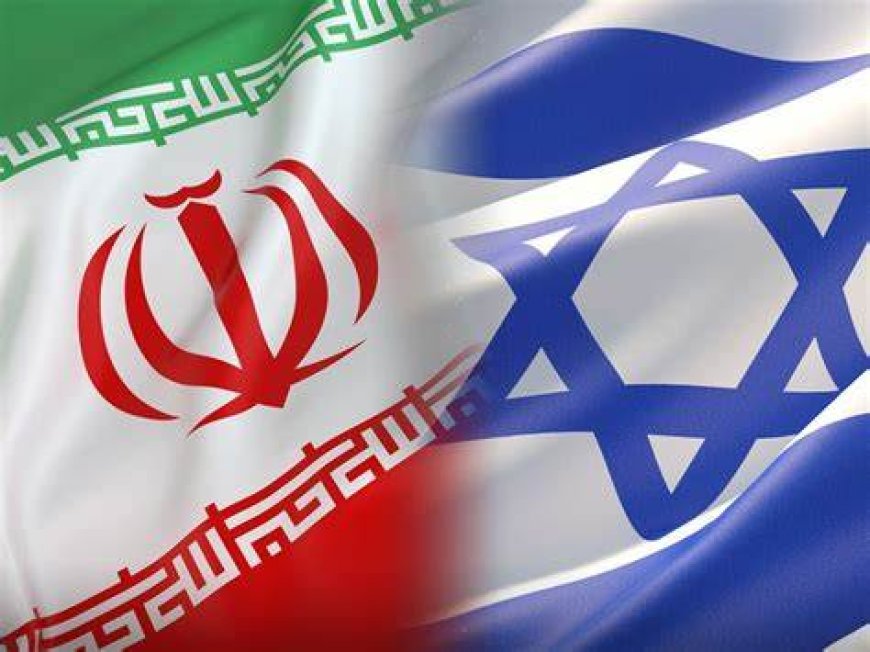
The United States President, Donald Trump, approved the attack on Iran in the early hours of February 28, 2028, after accusing the Middle Eastern country of posing a threat to U.S. interests.
The U.S. President cited Iran’s record of bloody repression, its support for regional proxies, and allegations that it is secretly seeking to build a nuclear weapon. He has also called for regime change in Iran.
Iran has responded with attacks against U.S. interests in other Middle Eastern countries such as the UAE, Bahrain, Qatar, Kuwait, and Israel. It is also reportedly targeting Saudi Arabia, Jordan, and even Iraq, all countries with significant U.S. presence and strategic interests.
The attack is unfolding over a weekend when global markets are closed. However, the likely global economic impact is already being analyzed across the world.
Iran is one of the world’s largest crude oil producers, with estimates suggesting it produces around 1.5 million barrels per day.
The Gulf countries currently under threat collectively produce an estimated 18 million barrels per day. Their output could be severely impacted if the war escalates beyond control.
For Nigeria, the U.S./Israeli conflict with Iran could have widening economic ramifications. I suspect this could affect Nigeria’s crude oil sales, oil prices, imports of strategic goods and services, capital inflows, exchange rate stability, travel, and security.
Here is how I think events may unfold in the coming days and weeks.
Crude Oil Sales
Nigeria is currently ranked among the top oil producers globally. It sits behind countries such as Saudi Arabia, Iraq, the UAE, Iran, and Kuwait in terms of output. Any disruption to crude oil production in these countries could create an opportunity for Nigeria — if it can increase its own output.
January data from OPEC indicate that Nigeria produced approximately 1.47 million barrels per day in January 2026. Nigeria’s top crude export destinations include Spain, India, and France.
If Nigeria can ramp up production at a time when supply from the Gulf is constrained, this could significantly boost fiscal revenues.
However, reports that Iran may close the Strait of Hormuz — which handles nearly 20% of the world’s oil supply — introduce another layer of risk. A blockage could severely disrupt global supply chains, leading to broader economic consequences.
Impact on Nigeria – Potentially Positive
Crude Oil Prices
Brent crude rose to $72.87 per barrel on the day of the attack as traders weighed the potential consequences. Depending on how prolonged the conflict becomes, prices could climb above $100 per barrel within weeks.
Historically, Gulf crises have created windfall gains for Nigeria due to elevated oil prices. A major escalation point would be if Iran proceeds with closing the Strait of Hormuz. According to reports, about 21 million barrels of oil from Iran, Iraq, Kuwait, Saudi Arabia, and the UAE pass through that route daily.
While the current hostilities are already pushing prices upward, a full closure of the Strait would represent a structural supply shock with far-reaching consequences for global oil markets.
At $73 per barrel, crude is already at a seven-month high and has risen nearly 12% over the past month. The upward pressure could persist if tensions deepen.
Impact on Nigeria – Positive
Fuel Prices
Higher crude oil prices typically have immediate implications for petrol prices.
Petrol prices in Nigeria averaged ₦1,036 in January and had been declining following increased output from the Dangote Refinery and a relatively stronger naira.
However, petrol pricing remains linked to global crude benchmarks. If crude prices rise sharply, there is a high likelihood that fuel prices will increase again.
A stronger naira may cushion some of the impact, but it may not be sufficient to offset the upward pressure.
Impact on Nigeria – Negative
Exchange Rate
Nigeria relies heavily on crude oil proceeds to build external reserves. With reserves now above $50 billion, many expect the naira to remain relatively stable in the near to medium term.
An escalation of the crisis could paradoxically strengthen the naira — if Nigeria successfully increases output and benefits from higher oil prices while global demand for its crude remains intact.
However, there is also downside risk. Heightened geopolitical tensions could dampen foreign investor appetite for Nigerian securities. If global investors become risk-averse, capital flows into emerging markets — including Nigeria — could slow.
Impact on Nigeria – Potentially Positive, but Risk-Weighted
Investments
A world in the midst of a Middle Eastern war is rarely conducive to global investment confidence. Nigeria needs sustained capital inflows, particularly foreign direct investment (FDI), to support its reform trajectory.
If the conflict escalates, investment decisions requiring global risk committee approvals may be delayed or suspended. Dealmakers typically reassess geopolitical exposure during periods of instability.
While the war is not directly happening in Nigeria, global capital allocation decisions are influenced by broader risk sentiment.
Elevated geopolitical risk often leads to capital preservation strategies rather than expansion into frontier markets.
Impact on Nigeria – Negative
Goods, Services & Commodities
The last major geopolitical shock of comparable magnitude was Russia’s invasion of Ukraine. The effects were immediate and global, particularly in energy and agricultural commodities.
Although this conflict primarily affects oil and gas, secondary effects could spill into other commodity markets. For example, fertilizer prices could rise, triggering higher global food prices.
Energy costs directly influence mining and industrial production, meaning mineral and precious metal prices could also climb.
There is historical data suggesting that oil price shocks often correlate with broader commodity inflation. Global shipping and air cargo routes could also face disruptions, further impacting trade flows and logistics costs.
Nigeria imports a significant proportion of its goods and services. Any global supply chain disruption would likely translate into higher import costs, feeding into domestic inflationary pressures.
Impact on Nigeria – Negative
Finally, while Nigeria could benefit from higher crude oil prices and improved fiscal buffers, the broader global economic instability may introduce inflationary pressures, capital flow risks, and supply chain disruptions.
The net outcome will depend largely on the duration of the conflict and Nigeria’s ability to capitalize on higher oil revenues without triggering macroeconomic imbalances.
US-Iran conflict: What it means for Nigeria’s economy, exchange rate - Nairametrics