

Nigerian Tax Acts 2025: Pros and cons
 admin
admin
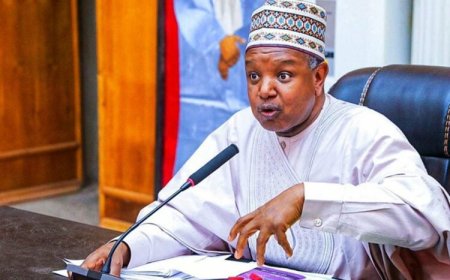
Joseph Tegbe, Chairman of the National Tax Policy Implementation Committee (NTPIC), enumerates the benefits of the Nigerian Tax Reform Acts 2025, stating that it marks a significant turning point in the country’s pursuit of a robust and sustainable economy, writes Jill Okeke.
Explaining what the Tax Acts 2025 means, Tegbe described it as a comprehensive overhaul of the country’s fiscal architecture, aimed at creating a modern, efficient, and transparent tax system that supports economic growth, development, and prosperity for all Nigerians.
Tegbe, who is also the Director-General of the Nigeria-China Strategic Partnership (NCSP), affirmed that the new tax law is built around four key pillars: reconnecting the economy to the state, standardising and modernising fiscal administration, promoting predictability, and re-balancing the fiscal social contract.
“By broadening the tax net, simplifying rules, and improving administration, we are creating a more predictable fiscal environment that supports businesses and households,” he explained.
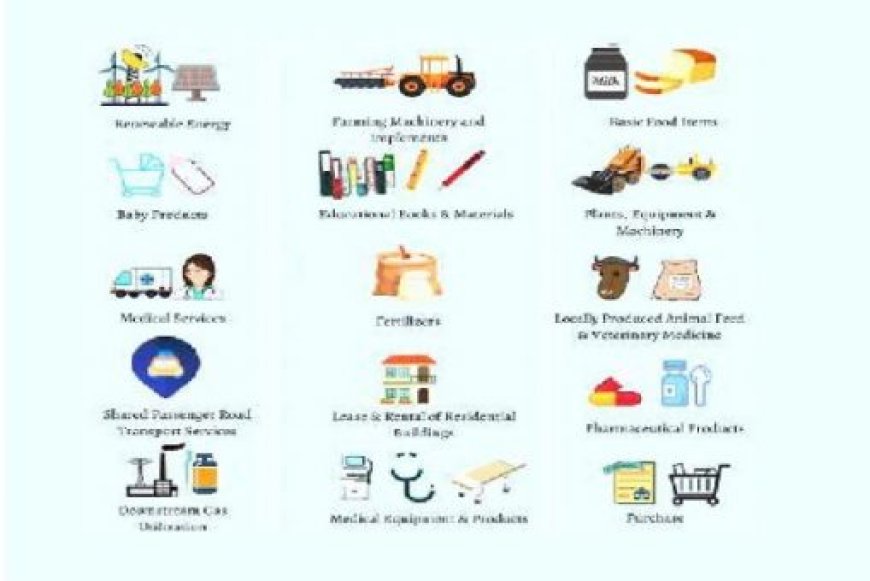
The NTPIC Chairman cited global best practices that informed the reforms, citing examples from South Korea, Singapore, and Rwanda, where tax reforms have driven economic growth and development. “These countries have shown that with the right policies, institutions, and leadership, it is possible to transform a nation’s economy and improve the lives of its citizens,” he said.According to him, the tax reform will protect low-income earners and small businesses, with measures such as zero tax rates for those earning up to N800,000 and the expansion of zero-rated VAT items for critical sectors, including healthcare, education, and agriculture.
“By taking away the tax burden on small income earners and small businesses, the reforms aim to preserve livelihoods, encourage formal participation, and allow enterprises to grow organically. We recognise that these sectors are critical to our nation’s development, and we are committed to supporting them,” he noted.
The Tax Acts 2025 also emphasises digitalisation and technology-driven tax administration, with the introduction of e-invoicing to improve compliance, transparency, and reduce administrative burdens, a significant step towards modernising the tax system and making it more efficient, he posited.
Consequently, he emphasised that the success of the reform depends on careful implementation, necessitating ongoing engagement with stakeholders to ensure proper understanding.
The implementation of the new Tax Acts is expected to stabilise the fiscal environment, support production, protect critical sectors, and modernise tax administration in line with global standards.
It will also enhance Nigeria’s ease of doing business, attract foreign investment, and generate employment opportunities. “We are confident that these reforms will unlock new opportunities for businesses, investors, and entrepreneurs, and contribute to the growth and development of our economy,” he added.
He acknowledged the arguments against the Nigerian tax reforms, which came into effect on January 1, 2026.
Critics have argued that the Tax Acts 2025 will place an economic burden on citizens and would compound the economic hardship.
Arguments against taxation
According to the opponents of the new policy, implementing new taxes at a time when inflation is record-high (over 24% in late 2025), following the removal of fuel and electricity subsidies, is ‘draconian’.
Besides, they claimed the reforms would worsen poverty and further erode the purchasing power of low-income earners.
Fiscal autonomy and federalism: The proposed VAT sharing formula (55% for states, 35% for local governments, and 10% for the federal government) is criticised for potentially undermining the fiscal autonomy and sustainability of states. Northern stakeholders, in particular, have argued that it may disproportionately affect certain regions.
Major interest groups, including opposition parties, claim the process was rushed with inadequate consultation of key stakeholders.Others opposed to it have expressed a lack of trust in the government’s ability to utilise tax revenue effectively, citing past failures in accounting for subsidy savings and a lack of tangible infrastructure development.
Concerns have been raised regarding new provisions in the gazetted laws that allow for taxpayer arrests through law enforcement agencies, powers that were reportedly absent from the version originally passed by the House of Representatives.
Rallying support for taxation
Nevertheless, the Lagos State Chapter of the All Progressives Congress (APC) has described criticisms surrounding the new tax reform policy as largely driven by misinformation, sensationalism and political mischief.
In a statement signed by its spokesman, Mogaji Seye Oladejo, the party said it was necessary to clarify the objectives of the reform in the interest of public understanding, national stability and informed civic engagement.
According to the Lagos APC, the new tax framework is not targeted at low-income earners nor designed to impose additional hardship on struggling Nigerians.
Rather, it said the reform prioritises the protection of vulnerable groups through expanded exemptions and a more progressive tax structure aligned with international best practices.
The party noted that Nigerians within the lowest income brackets are either exempted from taxation under the new regime or will experience reduced tax obligations.
It maintained that the reform is focused on efficiency, equity and accountability, adding that portrayals of the policy as punitive are misleading.
The APC further argued that Nigeria could no longer sustain a modern economy on what it described as an outdated, fragmented and oil-dependent tax system.
It recalled that the country had for years grappled with multiple taxation, overlapping mandates, revenue leakages and weak enforcement—conditions it said discouraged investment, stifled business growth and rewarded tax evasion.
For businesses, particularly Micro, Small and Medium Enterprises (MSMEs), the party said the reform simplifies tax compliance, eliminates nuisance taxes and creates a more predictable fiscal environment. It added that the framework also promotes fairness by ensuring that large and profitable corporations contribute an equitable share to national development.
The Lagos APC emphasised that taxation remains a key instrument for funding public infrastructure, education, healthcare, security and social protection. It stated that sustainable development is built on a functional social contract in which citizens contribute, and the government delivers, noting that the current administration is seeking to strengthen that relationship through fiscal reforms.
While acknowledging that reforms of such scale require transparency, public engagement and sensitivity in implementation, the party said constructive criticism should be encouraged, but deliberate falsehoods must be rejected.
Urging Nigerians to look beyond political rhetoric and fear-driven narratives, the APC insisted that the tax reform represents a difficult but necessary policy choice aimed at securing long-term economic stability rather than short-term political gains.
The party said the reform is part of broader efforts to lay the foundation for a stronger, fairer and more sustainable economic future for Nigeria.
“Contrary to the alarmist narratives peddled by the opposition, Nigerians earning within the lowest income brackets are either fully exempt or will experience reduced tax exposure under the new regime.
“The reform targets efficiency, equity, and accountability—not punishment. Those who have chosen to weaponise falsehoods against this policy have done so out of either ignorance or calculated desperation.“The truth is simple: Nigeria can no longer run a modern economy on an archaic, fragmented, and oil-dependent tax structure. For decades, the nation suffered from multiple taxation, overlapping mandates, leakages, and weak enforcement—a system that stifled businesses, discouraged investment, and rewarded tax evasion. This reform decisively confronts those failures.”
Nigerian Tax Acts 2025: Pros and cons - The Nation Newspaper