

Is acquisition the new shape of power sector?
 admin
admin
There is a universal consensus on the importance of private capital inflows in the resolution of the Nigerian power problem. Finance, public and private, stakeholders agreed, is the linchpin to uncoil the long wire to power every house and business.
A recent United Nation Development Programme (UNDP) report on the Nigerian power sector identified finance as the key to unleash the full potential of the transformative initiatives by the government over the past two and half years. Starting from the landmark June 8, 2023 signing into law of the Electricity Act 2023 by President Bola Tinubu to the institutionalisation of the National Integrated Electricity Policy (NIEP) in May 2025, the power sector has been a focus of intense reforms by the government. These reforms- across generation, transmission, distribution and retailing, have shown appreciable results. The Energy Commission of Nigeria acknowledged that several initiatives in recent period have seen the country’s electricity supply rising by 50 per cent, from historic 4,000 megawatts to 6,000 megawatts. But the gap is still wide and finance is the key.
“For the reforms in the sector to succeed, financing is key. Public finance alone will not solve the sector’s challenges, hence leveraging private sector capital is crucial,” the UNDP report stated. The NIEP also underlined that significant capital injection from the private sector is necessary for the success of the power sector reforms. The Energy Commission of Nigeria estimates that for every household to have affordable access to electricity, Nigeria must generate 40,000 MW.
At the recent Mission 300 summit, President Tinubu underlined the importance of private, public partnerships in achieving mass electrification of Nigeria and other African countries. He estimated that Nigeria would require an investment of $23.2 billion for last-mile electrification, including contributions from the public and private sectors. This implies that existing and new investors must find the power sector attractive enough for huge capital investments.
Major acquisitions in recent weeks appear to set up the Nigerian power sector as the thematic segment for the government’s 2026 consolidation agenda. In one instance, Transgrid Enerco Limited completed acquisition of 60 per cent equity stake in Eko Electricity Distribution Plc (EKEDC), the first market-driven acquisition of a Nigerian electricity distribution company since the power sector privatisation. With a large swathe of industrial, commercial and high-brow residential areas across Lagos and Ogun States, EKEDC is one of Nigeria’s largest electricity distribution companies (Discos) and generally regarded as of strategic importance to the nation’s economic growth.The acquisition was funded by debt and equity financing, underlining the chain of private capital inflows. Chairman, Transgrid Enerco Limited, Engr. Olubunmi Peters, said the acquisition reflected renewed confidence in Nigeria’s power sector.
He said: “This transaction shows that Nigeria’s electricity distribution sector can attract long-term capital when there is a clear focus on operational excellence and disciplined execution”.
Private equity comes to the market
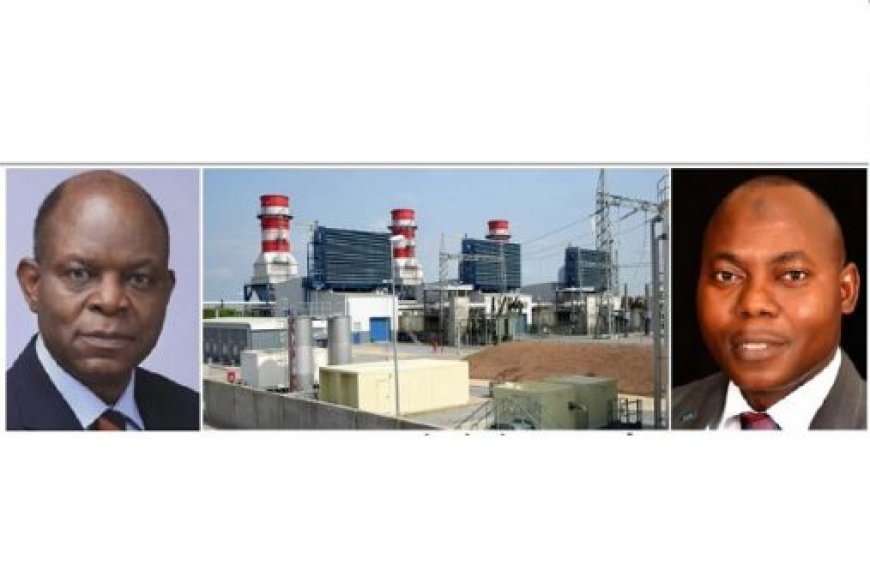
But the biggest transaction was the acquisition of the publicly listed Geregu Power Plc. Valued at nearly N3 trillion and currently contributing more than one-tenth of electricity to national grid, Geregu Power has all the trappings of an industry leader. The first power generation company (GenCo) to be listed on the stock market, Geregu Power interlinks national importance with private corporate growth and value creation. As such, the acquisition has been described as the most consequential acquisition in the Nigerian market in recent period. In a regulatory filing at the Nigerian Exchange (NGX), the board of Geregu Power stated that the company’s majority shareholder, Amperion Power Distribution Company Limited, owned by billionaire businessman, Femi Otedola, had undergone a restructuring of its ownership following a share sale and acquisition concluded on December 29, 2025. As a result of the transaction, MA’AM Energy Limited acquired 95 per cent equity interest in Amperion Power Distribution Company, thus the indirect controlling interest in Geregu Power previously held by Calvados Global Services Limited and Otedola was transferred to MA’AM Energy Limited. While the transaction did not involve the direct sale or transfer of shares of Geregu Power, the change in the ownership of the company’s majority shareholder resulted in a change in the ultimate beneficial ownership of 77 per cent of Geregu Power’s issued share capital.
The transaction was reportedly valued at $750 million or about N1.1 trillion. The acquisition was financed by a consortium of Nigerian banks with Blackbirch Capital as the financial adviser. This further underlined the strong private capital inflows into the power sector and enhanced investment assessment for the sector.
With the change in beneficial ownership, the Femi Otedola-led board resigned immediately, paving the way for the appointment of a new board of directors by MA’AM Energy. While MA’AM Energy, an Abuja-based integrated energy company engaging in electricity generation and supply, energy trading, and marketing, has maintained a relatively low public profile, market analysts said its ability to close one of Nigeria’s largest private equity deal and put together consortium of institutional financiers was an indication of its strong presence and confidence in the energy sector.
The new board of director also represented a veritable intersection of public influence, governance, finance, technical experience and compliance. The new board is led by Senator Abdul-Aziz Yari, former Governor of Zamfara State and current Senator representing Zamfara West. Yari, a former chairman of the highly influential Nigerian Governors’ Forum, holds MSc in Public Administration, Finance and Investment Management from the University of Salford and a Certificate in Leadership and Change from the London School of Economics, in addition to other foundational education.
Other non-executive directors included Abdulkadeer Njiddah, Principal Partner at Abdulkadeer & Co. (Chartered Accountants) who holds PhD in Accounting and Finance and a fellow of the Institute of Chartered Accountants of Nigeria (ICAN) and Institute of Internal Auditors of Nigeria (FIIA); Usman Mohammed, an expert in infrastructure and private financing solutions and a chartered accountant with PhD in Finance and over 30 years’ experience in power sector utility diagnosis, reform, and transformation and Mohammed Sani Jaafaru, who holds MBA in Finance from Strayer University, Washington D.C and currently Chief Operations Officer at Advance Link Petroleum Limited.
Also on the board as non-executive directors were Neka Adogu, a banker and financier of more than two decades, including as a General Manager at Access Bank Plc, Nigeria’s largest bank by assets and Mahmud Magaji, a Senior Advocate of Nigeria (SAN) and member of the Federal Judicial Service Commission with specialty in international dispute resolution. Meanwhile, outgoing Chief Executive Officer, Mr Akin Akinfemiwa and Deputy Chief Executive Officer, Dr. Julius Omodayo-Owotuga were retained to facilitate smooth management transition, working with the newly appointed board.
A new power playExperts said the Geregu Power acquisition might be the beginning of a new era for the Nigerian power sector.
Managing Director, GTI Capital, Mr. Kehinde Hassan, said the transaction, valued at approximately $750 million, set a new benchmark for GenCo valuations in Nigeria.
“It is likely to influence future mergers and acquisitions, stimulate private equity interest, and reshape asset pricing across the power sector.
“Beyond Geregu, the deal carries broader implications for the Nigerian power industry. A $750 million investment in a sector often labeled “high-risk” sends a powerful signal about the underlying potential and long-term value of Nigeria’s electricity market. This could catalyze further GenCo and DisCo acquisitions, attract renewed interest from domestic institutional investors, and spur recapitalization efforts across the value chain,” Hassan, a Fellow of the Institute of Chartered Accountant of Nigeria (ICAN) and Chartered Institute of Stockbrokers (CIS), said.
He also noted the timing of the acquisition. According to him, the acquisition coming at a time when the Federal Government is planning a N4 trillion power-sector liquidity fund, further positions the sector as increasingly private‑equity friendly and primary target for deeper financial participation.Managing Director, Arthur Steven Asset Management, Mr Olatunde Amolegbe, said stakeholders were optimistic that the new owners would deploy the necessary technical and financial capability to increase the capacity and efficiency of the company to enable it meets its mandate to all stakeholders.
He said: “The company was quite profitable under the previous owners, though some investors felt its price multiple was too high. The new owners will need to prove that its stock price is well justified”.
Managing Director, Vetiva Securities Limited, Mr. Abiodun Adeniran, said while the private equity nature off the deal did not elicit any major immediate market reactions, market expectations would be subject to the expertise that MA’AM Energy is bringing on board and the impact on operations and financial performance going forward.
“This is just unfolding and the market is patiently waiting for the new strategic direction,” Adeniran said.
Hassan also echoed the same sentiment. According to him, with the shift in ownership, the market is expected to adopt a cautious, observant stance as it awaits clarity on the new owners’ strategic direction.
He noted that while a key focus for investors would be governance and management continuity, stakeholders would be watching closely to see whether the new leadership will maintain Geregu’s strong dividend culture, operational efficiency and commitment to expansion pipeline, including the proposed Geregu II and III projects.
Managing Director, HighCap Securities, Mr. David Adonri, said stakeholders are eagerly waiting for the new board’s strategic plan.
For minority shareholders, while the deal signaled a major positive momentum for the power sector, the underlying importance would be determined by value creation. With a free float of about 19 per cent, Geregu Power is a company of public concern.
President, Association for the Advancement of Rights of Nigerian Shareholders (AARNS), Dr. Faruk Umar, said the size and nature of the deal were quite symbolic for the Nigerian economy, the power sector and the capital market.
He noted that with the broad experience of the new board and the strategic assets under Geregu, the market expectation was high.
He said such huge investment of above N1 trillion by Nigerians in a Nigerian company, especially in the critical power sector, primarily deserves commendation, describing it as a good response to President Tinubu’s quest to deepen domestic private investments.
According to him, when Nigerians show willingness to participate in the country’s infrastructural development, such a move carries not only the potential value creation but also reinforcement of hope and confidence in the long-term outlook of the economy.
He urged the new owners to adopt best practices in stakeholders’ management through fair consideration for all and inclusive engagement.
National Coordinator, Independent Shareholders Association of Nigeria (ISAN), Mr. Moses Igbrude echoed similar sentiment.
He noted that the $750 million Geregu transaction was a huge transaction that would define investments in the electricity sector as it might trigger other similar transactions soon.
He however said minority shareholders were concerned about the new core investors and their plans.
“My sincere appeal to them is for them to act in good faith and pilot the affairs of the company in proper manner in line with good governance that brings benefit to all stakeholders,” Igbrude said.
Another shareholders’ leader, who craved anonymity, said the deal would only be justified if it leads to real improvements in power generation, accountability and sustainable returns.
As the new board of Geregu prepares for its first formal meeting that is expected to deliberate on composition of important committees, strategic announcements and the principle of corporate direction, stakeholders may view the ownership change through the fundamentals of the company. By the third quarter ended September 30, 2025, Geregu Power recorded total revenue of N131.47 billion, with pre and post tax profit of N37.46 billion and N25.1 billion respectively. Earnings per share was thus at N10.04 by third quarter 2025. Total assets meanwhile stood at N273.15 billion by September 2025, as against N243.47 billion recorded by December 2024.For the first quarter ending March 31, 2026, Geregu Power projected total revenue of N57.12 billion within the three-month period. Gross profit was estimated at N22.88 billion while operating profit, profit before tax and profit after tax were expected at N18.12 billion, N17.06 billion and N12.03 billion respectively. For stakeholders, the task before the new core investor is to unlock the financial value and national contribution.
Is acquisition the new shape of power sector? - The Nation Newspaper