

‘How to drive rapid technological change’
 admin
admin

Stakeholders have raised concerns that leadership mentorship, STEM inclusivity and sustained advocacy are now critical to Africa’s development, as rapid technological innovation increasingly drives economic growth, job creation and governance across the continent.
The urgency, they noted, stems from widening skills gaps, persistent gender exclusion and the need to deliberately prepare young Africans to drive science, technology and innovation in ways that respond to local realities rather than imported models.
According to experts, STEM, an acronym for Science, Technology, Engineering, and Mathematics, represents a group of interconnected academic disciplines crucial for innovation, economic growth, and tackling global challenges, emphasizing critical thinking, problem-solving, and hands-on application.
This emerged at a leadership dialogue titled The Future of STEM in Africa, jointly organised by the United States Mission and the Mandela Washington Fellowship Alumni Association, in collaboration with the Working to Advance Science and Technology Education for African Women (WAAW) Foundation.
The event brought together fellows of the 2025 Mandela Washington Fellowship and WAAW Foundation College Fellows for mentorship, policy focused engagement and advocacy on inclusive STEM leadership across Africa.A total of 26 fellows participated in the dialogue, including 10 Mandela Washington Fellows and 16 WAAW Fellows drawn from Olabisi Onabanjo University, the Federal University of Technology Minna, the Federal University of Technology Owerri and the University of Ibadan.
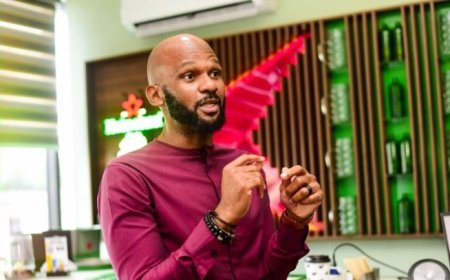
The representative of the U.S. Mission Nigeria, Diran Adegoke said collaboration among young leaders was critical to achieving sustainable impact, urging participants to build long term partnerships beyond institutional boundaries.
“Collaboration is the key driver of sustainable impact,” Adegoke said, noting that Africa’s development challenges require collective action rather than isolated interventions.Earlier, the Executive Director of WAAW Foundation, Oluwatimilehin Onafeso, said Africa could no longer afford to treat women’s participation in STEM as optional, stressing that exclusion from science and technology continues to limit innovation and economic competitiveness.
She said WAAW’s work across the continent is aimed at advancing African women and girls in STEM through education, leadership development and advocacy, adding that deliberate investment in women is central to closing Africa’s development gaps.
The dialogue featured an open session led by Mandela Washington Fellows, who shared experiences of navigating leadership, gender barriers and social expectations within STEM spaces, where the participants agreed that leadership approaches that encourage inclusion, such as creating room for diverse voices in decision making, are essential to building resilient institutions.
Addressing concerns raised on promoting STEM in communities facing poverty, cultural resistance and gender norms, the participants said STEM solutions must be community informed and culturally relevant to gain acceptance and deliver results.
The programme also included practical sessions on the application of emerging technologies, with WAAW Fellows exploring the use of artificial intelligence and machine learning for social development, alongside hands on demonstrations to reinforce technical understanding.
Participants said the engagement strengthened mentorship networks and reinforced the need to embed leadership development, inclusivity and advocacy at the core of Africa’s STEM agenda.
Organisers said the dialogue would be followed by continued collaboration aimed at expanding opportunities for young Africans, particularly women, to influence STEM policy, innovation and leadership across the continent.
‘How to drive rapid technological change’ - The Nation Newspaper