
2026 outlook: key sectors to drive economy by ex-NBS boss
 admin
admin
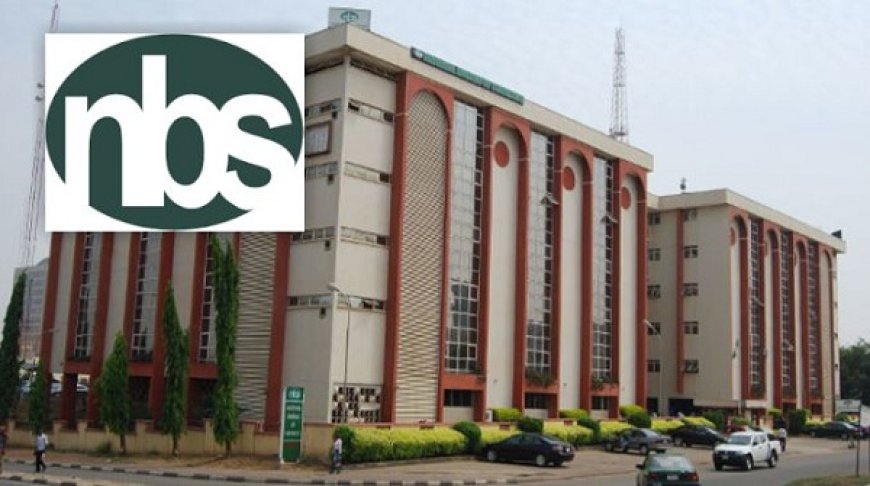
ERSTWHILE Statistician-General of the Federation, Yemi Kale, has listed the five sectors that would drive Nigeria’s economic growth in 2026.
The list includes Information and Communication Technology ICT and digital services, construction and infrastructure, energy and refining, particularly downstream activities; agro-processing, and services.
The former Director-General of the National Bureau of Statistics (NBS) made the projections on Tuesday at Firstbank’s 2026 Nigeria economic outlook themed: ‘The Great Recalibration: Mastering Resilience in an Era of Asynchronous Growth’.
Kale, who is the current Group Chief Economist and Managing Director of Research and Trade Intelligence at AfreximBank projected that ICT and digital services would be the fastest-growing, driven by fintech, e-commerce, broadband expansion, and maturing tech ecosystems.
He said construction and infrastructure will benefit from public investment and rising private participation, while energy and refining — especially in the post-Dangote refinery environment — will reduce fuel imports and create petrochemical linkages.Agro-processing, Kale said, would gain from the African Continental Free Trade Area (AfCFTA) integration, improved logistics and emerging processing clusters in rice, cassava, cocoa, and dairy.He said moderating inflation would upport recovery in services such as retail, transport, tourism, real estate, and professional services.
The economist said the sectors would shape a more stable and diversified growth path in 2026, helping Nigeria shift from volatility towards sustained and broad-based growth.
Kale, however, warned that Nigeria must strengthen its value chains and invest in technology to build resilience.
He said although Nigeria records growth across multiple sectors, too few deliver meaningful productivity or global competitiveness.
He noted that policy discussions around diversification often miss the point by focusing on revenue expansion or tax base widening rather than fixing the structural constraints to productive growth.
“We are structurally diversified, but not productively diversified. In other words, we produce a lot, but too little of it is complex value-added or tradable, and this is where our policy often misses the point,” Kale said.
“When policymakers talk of diversification, it is really frequently interpreted by policymakers as expanding revenue sources or widening the tax base, rather than addressing the true constraints to productive growth, such as poor infrastructure, unreliable power, weak logistics, issues with skills gaps, limited credit access for SMEs.
“To build real resilience, Nigeria must move from extractive dependence to productive competitiveness, which it hasn’t done yet, and to do this by strengthening value chains, supporting industrial clusters, and investing in human capital, technology, and infrastructure.”
2026 outlook: key sectors to drive economy by ex-NBS boss - The Nation Newspaper